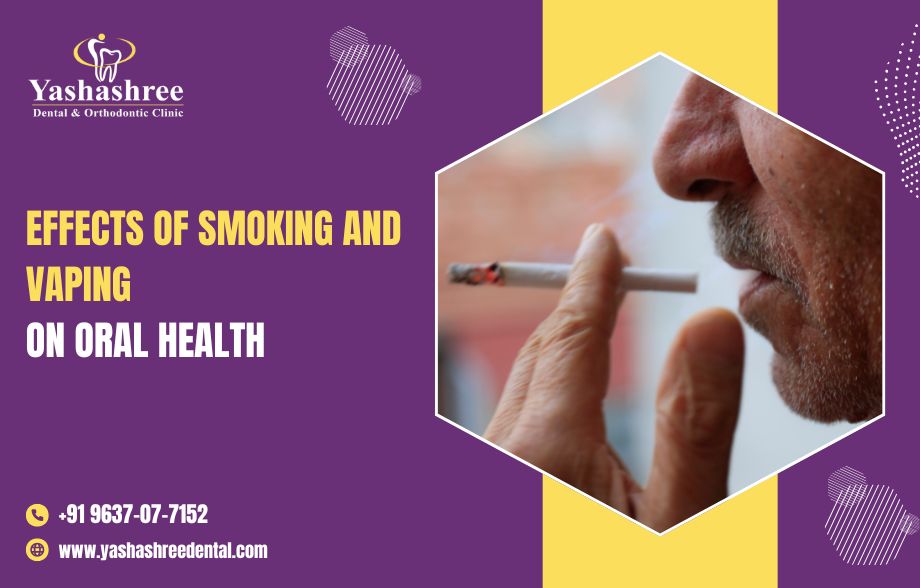
Every habit has an aftereffect, such as smoking, vaping, and tobacco consumption of any kind. A lingering taste in the mouth after a cigarette. Gums that bleed a little more than usual. Breath that never feels truly fresh, no matter how often you brush. Many people notice these signs but brush them aside, especially when smoking or vaping feels like a personal habit rather than a health concern.
At Yashashree Dental & Orthodontic Clinic, Dr. Deepali Chavan often meets patients who come in for routine dental concerns and leave with a deeper realization. The effects of smoking and vaping on oral health are disastrous, and one should never indulge in such habits. The mouth, after all, reacts quickly to habits. It signals distress long before the rest of the body speaks up.
Why the Mouth Reacts First to Smoking and Vaping?
The oral cavity acts like a front door to the body. Every puff of smoke or vapor passes through delicate tissues, teeth, and gums before going anywhere else. Unlike skin, the tissues inside the mouth stay moist and absorb substances easily. That makes them especially vulnerable.
Smoking introduces tar, nicotine, and chemicals that reduce blood flow to the gums. Vaping may look cleaner, but heated aerosols and flavoring agents still irritate oral tissues. Think of the mouth like fertile soil. What you introduce daily influences what grows or struggles to survive.
Over time, these habits can disrupt the balance that keeps the mouth healthy.
Effects of Smoking and Vaping on Oral Health You Should Not Ignore
Understanding the effects of smoking and vaping helps you recognize why dentists take these habits seriously. The changes often happen gradually, which makes them easy to miss until they become difficult to reverse.
Some of the most common oral health effects include:
Gum disease progression
Smoking reduces oxygen in the bloodstream. Gums receive less nourishment and heal slowly. This creates the perfect environment for infections to thrive.
Persistent bad breath
Tobacco particles cling to oral tissues. Vaping flavors may mask odor temporarily, but often worsen dryness, which fuels bacteria.
Tooth discoloration
Nicotine stains enamel. Over time, teeth lose their natural brightness and resist regular cleaning.
Increased risk of oral cancer
Long-term exposure to tobacco chemicals raises the risk significantly. Early signs often appear as small mouth sores or patches that do not heal.
Dry mouth and sensitivity
Both smoking and vaping reduce saliva flow. Saliva protects teeth and neutralizes acids. Without it, sensitivity and decay increase.
These effects rarely appear overnight. They build slowly, like water seeping into a wall until cracks show on the surface.
Smoking vs Vaping: Are They Equally Harmful to Oral Health?
Many people switch to vaping, believing it offers a safer alternative. While vaping avoids combustion, it does not eliminate harm to oral tissues. Heated aerosols still irritate the mouth and alter bacterial balance.
Key differences dentists often observe include:
Smokers show more visible staining and advanced gum recession.
Vapers experience higher levels of dry mouth and gum inflammation.
Both groups face delayed healing after dental procedures.
Both habits increase the risk of infections and decay.
At Yashashree Dental & Orthodontic Clinic, Dr. Deepali Chavan explains to patients that the mouth does not grade harm on a curve. Any repeated exposure that disrupts natural defenses eventually leaves a mark.
How These Habits Affect Dental Treatments?
Smoking and vaping not just impact oral health, but also impact dental work. Dentists often notice slower healing and higher complication rates among patients who smoke or vape.
Common challenges include:
Delayed recovery after extractions or gum treatments
Reduced the success rates of dental implants
Increased plaque buildup even with good oral hygiene
Frequent gum flare-ups despite regular cleanings
Imagine trying to repair a small cut while repeatedly exposing it to irritants. Healing becomes slower and less predictable. The mouth behaves the same way.
Where Emotions Meet Oral Wellness…
Oral health issues do not stop at physical discomfort. They affect confidence, speech, and social interactions. Many patients mention avoiding close conversations or smiling less because they feel self-conscious about their breath or gum appearance.
Addressing these concerns often brings unexpected relief. Patients who reduce or quit smoking or vaping frequently report improvements not just in their mouths, but also in how they feel day to day.
What Dentists Look for During Checkups?
During routine visits, dentists assess more than cavities. They look for subtle tissue changes that signal stress from smoking or vaping.
These include:
Gum color and texture changes
Unusual patches on the tongue or cheeks
Signs of bone loss around teeth
Levels of plaque and tartar buildup
Early detection allows dentists to intervene before serious damage occurs. This is where regular visits to an experienced dentist in Satara, such as Dr. Deepali Chavan at Yashashree Dental & Orthodontic Clinic, or to your nearest dentist, make a meaningful difference.
Small Changes That Protect Your Smile
While quitting entirely offers the greatest benefit, even small changes help. Improved oral hygiene, hydration, and regular cleanings reduce the impact of smoking and vaping.
Helpful steps include:
Drinking more water to combat dry mouth
Using dentist-recommended mouth rinses
Scheduling professional cleanings regularly
Discussing habit-related risks openly with your dentist
Each step strengthens the mouth’s ability to heal and defend itself.
Looking Ahead with Awareness and Support
Understanding the effects of smoking and vaping empowers better choices. Oral health does not exist in isolation. It reflects daily habits and responds quickly when those habits change.
Dr. Deepali Chavan encourages patients to view dental visits as a partnership. Honest conversations lead to practical solutions, not judgment.
If you notice changes in your gums, teeth, or breath, do not wait. Book a consultation at Yashashree Dental & Orthodontic Clinic and take the first step toward protecting your smile from the long-term effects of smoking and vaping on oral health. Your mouth often asks for help quietly. Listening early makes all the difference.
FAQs
1. What are the long-term Effects of smoking and vaping on oral health?
Long-term effects include advanced gum disease, persistent dry mouth, tooth loss, and a higher risk of oral cancer. These habits weaken natural defenses and slow healing. Regular dental checkups help identify early warning signs. Reducing or quitting significantly improves oral outcomes over time.
2. Can oral health improve after quitting smoking or vaping?
Yes, oral tissues begin to recover once exposure stops. Blood flow improves, inflammation reduces, and healing becomes more efficient. Teeth may still need professional care for stains or damage. Dentists often notice measurable improvements within months.
3. Does vaping cause fewer dental problems than smoking?
Vaping reduces some risks but does not eliminate harm. It still dries the mouth and irritates the gums. Many vapers develop inflammation and sensitivity. Dentists treat vaping-related issues frequently.
4. How often should smokers or vapers visit a dental clinic?
Dentists usually recommend more frequent checkups, often every six months or sooner. Regular visits allow early detection of gum disease or tissue changes. A trusted dental clinic in Satara, like Yashashree Dental & Orthodontic Clinic, can personalize preventive care based on individual risk.
Visit Now:
📍 NAP Details:
Name: Yashashree Dental & Orthodontic Clinic Satara
Address: 1st Floor, Amrutdhara Appartment, opposite IDBI Bank, Shivaji Circle, Powai Naka, Satara, Maharashtra 415001
Phone: +91 96370 77152