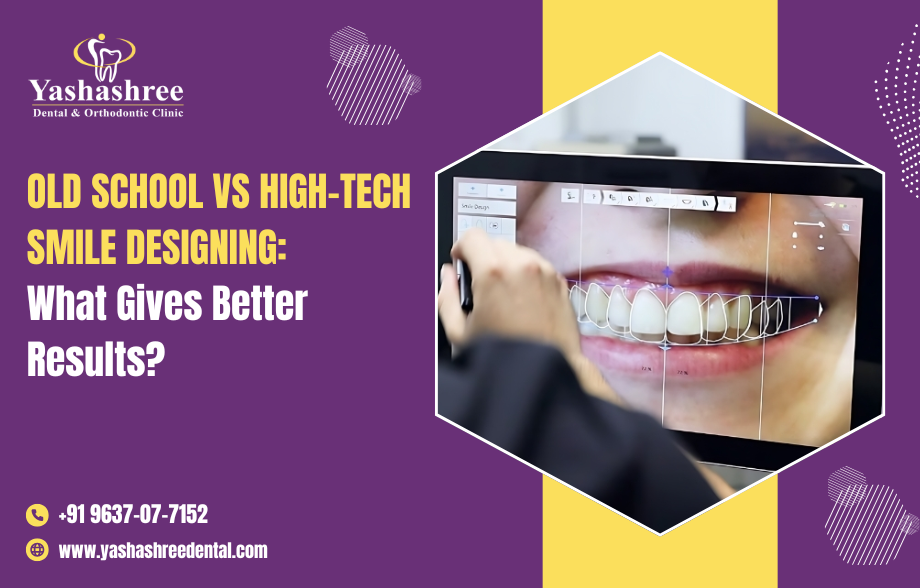
You know that moment when you look at an old photo and think and exclaim, “My smile looked different back then”? Many patients say this right before asking about digital smile design vs traditional smile design, often as a soft step toward finally fixing what has been bothering them for years.
The truth is, smile concerns rarely start overnight. They build slowly. A chipped tooth here, slight discoloration there, maybe uneven gums that only you notice, until one day, you can’t unsee it.
At Yashashree Dental & Orthodontic Clinic, patients often walk in with exactly this feeling. Not urgency. Just quiet dissatisfaction. And that’s where the conversation between old-school and high-tech approaches begins.
When Smiles Were Designed by Experience Alone
Before screens, scans, and simulations, dentists relied heavily on their trained eye and years of hands-on expertise. Traditional smile design focused on physical impressions, manual measurements, and visual judgment.
Many patients still remember this approach:
- The dentist studies your face and teeth carefully
- Takes molds using impression material
- Plans the smile correction based on experience
- Makes adjustments over multiple visits
This method built the foundation of modern cosmetic dentistry, and in skilled hands, it still delivers good results.
However, patients often share one common frustration: uncertainty.
They say:
- “I couldn’t really visualize the final outcome.”
- “I trusted the process, but I felt nervous.”
- “I wished I could see the result before committing.”
Traditional smile planning depends heavily on imagination. Most people don’t want surprises when it comes to their face.
The Rise of Technology in Smile Designing
Things started to change when digital dentistry entered everyday practice. Suddenly, guesswork was reduced, and visualization improved.
Now, instead of imagining your smile, you can actually see it before starting treatment.
Modern smile design uses tools like:
- High-resolution imaging
- Facial mapping
- Advanced 3d dental scan technology
- Software-driven simulations
At Yashashree Dental & Orthodontic Clinic, patients often react the same way when they see their digital preview, “This already feels more real.”
And that’s the turning point.
Digital Smile Design vs Traditional Smile Design: What Sets Them Apart?
1. Visualization vs Imagination
Traditional methods rely on verbal explanation and the dentist's interpretation.
Digital approaches use facial smile analysis and simulations to show expected outcomes.
With digital smile planning, you:
- See proportions
- Evaluate alignment
- Understand how your smile fits your face
This clarity makes a big difference in decision-making.
2. Personalization Level
Old-school techniques offer customization, but within limitations.
Modern custom smile treatment takes personalization further by considering:
- Lip movement
- Facial symmetry
- Tooth proportions
- Smile dynamics
This creates a more natural smile, not just a perfect one.
3. Accuracy and Precision
Traditional impressions can sometimes distort slightly.
Digital systems use precise scanning, especially with a 3d dental scan, improving accuracy in:
- veneers placement
- dental crowns fitting
- Overall smile correction
Patients notice fewer adjustments and better comfort.
4. Treatment Predictability
One of the biggest concerns patients express relates to outcomes.
With digital tools, dentists can simulate smile makeover results. This builds confidence and reduces hesitation.
Confidence matters just as much as the final result.
At Yashashree Dental & Orthodontic Clinic, people coming in for smile designing are confused about choosing between digital smile design vs traditional smile design, which is an everyday dilemma for our team.
The Transition That Nobody Talks About…
Let’s talk about something most blogs skip.
Patients don’t just want straight teeth. They want to feel comfortable smiling again.
Some common real-life concerns:
- Covering the mouth while laughing
- Avoiding photos
- Feeling self-conscious in meetings
A well-planned custom smile treatment doesn’t just change teeth. It shifts behavior.
At Yashashree Dental & Orthodontic Clinic, many patients mention how even small improvements in whitening or gum contouring changed how they carry themselves daily.
That’s where digital smile design vs traditional smile design differ, but digital methods often reach it faster and more predictably.
Where Traditional Smile Design Still Holds Value
Traditional methods have not become irrelevant.
Experienced dentists can still create excellent outcomes using:
- Manual techniques
- Deep understanding of aesthetic dentistry
- Clinical judgment
In simpler cases, traditional smile design works perfectly fine.
But when complexity increases, digital tools offer an edge.
When High-Tech Smile Designing Makes a Bigger Difference
Digital methods shine in cases involving:
- Multiple treatments in a smile makeover
- Complex smile correction
- Full-mouth rehabilitation
- Precise alignment needs
For example, combining:
- dental veneers
- teeth whitening
- gum contouring
- dental crowns
requires detailed coordination. Digital systems handle this complexity more efficiently.
What Patients Actually Care About
After years of working with patients, one thing becomes clear.
They don’t ask, “Is this digital or traditional?”
They ask:
- “Will it look natural?”
- “How long will it last?”
- “Will it suit my face?”
That’s why modern smile planning focuses on blending science with aesthetics.
Because a technically perfect smile that does not suit your face is not a win.
The Shift Toward Hybrid Approaches
Many experienced dentists now combine both worlds.
They use:
- Digital tools for planning
- Clinical expertise for execution
This hybrid model ensures:
- Accuracy from technology
- Artistic judgment from experience
At Yashashree Dental & Orthodontic Clinic, this balanced approach often delivers the most satisfying results, irrespective of the treatment they are focused on, amongst the most well-known digital smile design vs traditional smile design debate.
Common Treatments in Modern Smile Designing
Whether traditional or digital, most smile design plans include:
- teeth whitening for brightness
- dental veneers for shape and alignment
- contouring the gums for symmetry
- dental crowns for damaged teeth
Each element contributes to a cohesive, natural smile.
So, What Gives Better Results?
The answer is not black and white.
But here’s what patients consistently report:
- Digital methods improve clarity and confidence
- Traditional methods rely on trust and experience
- Hybrid approaches often provide the best outcomes
And that brings us back to digital smile design vs traditional smile design, not as a competition, but as an evolution.
FAQs
1. Is digital smile design better than traditional smile design for a smile makeover?
When comparing digital smile design vs traditional smile design, digital methods often provide better visualization and predictability for a smile makeover. Patients can see simulated results using smile analysis before starting treatment. This helps align expectations and reduces uncertainty. Traditional methods still rely on experience and manual evaluation, which works well in simple cases. However, digital tools improve accuracy using a 3d dental scan and advanced planning software. They also help coordinate multiple procedures like veneers, whitening, and contouring more effectively. Digital workflows support precise execution, especially in complex cases. Many dentists now combine both approaches to achieve optimal results. Ultimately, the choice depends on individual needs and case complexity.
2. What treatments are included in smile design procedures?
A comprehensive smile design usually combines several treatments under cosmetic dentistry. Common procedures include whitening to enhance brightness and veneers to improve shape and alignment. Dentists may also perform contouring to correct uneven gum lines. In cases of damaged teeth, dental caps help restore structure and function. Advanced planning using smile analysis ensures that all elements work together harmoniously. A custom smile treatment preview often helps patients understand expected results. Whether using traditional or digital methods, the goal remains a balanced smile. Each treatment plan is customized based on facial features and dental condition.
3. How does digital dentistry improve smile correction results?
Digital dentistry enhances smile correction by improving precision, planning, and communication. Dentists use tools like 3d scan technology to capture highly accurate images of teeth and gums. This data supports detailed planning and reduces errors during treatment. Patients can also visualize outcomes through simulations, making it easier to approve designs. Procedures like veneers and dental caps fit better due to improved measurements. Digital systems also help track progress during a smile makeover. This leads to fewer adjustments and more predictable outcomes. Overall, digital workflows streamline the entire process while improving patient confidence.
4. Can I achieve a natural looking smile with smile design treatments?
Yes, achieving a natural looking smile remains the primary goal of modern aesthetic dentistry. Dentists focus on factors like tooth size, shape, color, and alignment. They also consider facial features through smile analysis. Treatments such as whitening, contouring, and veneers work together to enhance overall appearance. Digital tools allow precise customization, ensuring results match your facial structure. Even traditional methods can deliver natural outcomes when performed by experienced professionals. A well-planned custom smile treatment helps maintain realistic expectations. The key lies in personalization rather than perfection.
Your Smile. Your Game. Your Confidence.
Your smile does not need to be flawless. It just needs to feel like you.
Whether you lean toward experience-driven methods or technology-backed precision, the right approach depends on your comfort, your expectations, and your goals.
If you have been quietly thinking about improving your smile, maybe it is time to explore your options and understand what digital smile design vs traditional smile design could mean for you.
Not as a trend. But as a step toward feeling a little more confident every day.