There are some dental problems that make themselves very obvious. A broken tooth, a sharp sting while eating, or a visible cavity will always get your attention. Gum disease, unfortunately, is not one of them. It often starts quietly, without any pain, and by the time people notice something is wrong, the gums are already struggling.
Many patients who visit us at Yashashree Dental Clinic come in for a routine cleaning and leave surprised to know they already have early signs of gum infection. It is far more common than most people realise. The good news is that gum disease can be treated and managed well when caught early. But first, before you visit Yashashree Dental Clinic for gum treatment in Satara, you need to understand what causes it and what symptoms should never be ignored. That awareness is the first step toward healthier gums and long-lasting teeth.
Why Do Gums Start Getting Infected?
Gum disease is not sudden. It develops slowly, often because of small habits or unnoticed changes in daily routine. Here are the common reasons it begins:
1. Plaque Buildup
Plaque is the thin film that forms on your teeth throughout the day. If it is not removed through brushing and cleaning between teeth, it hardens and irritates the gums. This is the primary cause of gum disease and the most preventable one.
2. Poor Brushing or Irregular Cleaning
Brushing too quickly, skipping night brushing, or avoiding flossing or interdental cleaning allows food particles to stay trapped. Over time, this invites bacteria that attack the gums.
3. Smoking or Tobacco Use
Tobacco affects the blood flow in the gums and lowers the ability of tissues to heal. People who smoke are more likely to experience severe gum problems.
4. Hormonal Changes
Teenagers, pregnant women, and individuals with hormonal imbalances may notice their gums becoming swollen or sensitive. Hormones can change how gums respond to plaque.
5. Medical Conditions
Diabetes, weakened immunity, or long-term medications can influence gum health. Reduced healing capacity or dry mouth can allow gum problems to grow faster.
6. Crooked Teeth or Bad Bite
Misaligned teeth create hard-to-clean areas. Bacteria settle in these spaces and quietly begin damaging the gums.
All of these factors contribute to inflammation around the teeth. And once the gums start reacting, symptoms begin to appear, even if they are easy to miss.
Early Symptoms That Should Not Be Ignored
Many people believe gum disease always comes with pain. That is not true. In fact, early gum disease, known as gingivitis, is usually painless. Understanding the early warning signs can help you get gum treatment at the right time before things worsen.
1. Bleeding While Brushing
Bleeding gums are not normal, even if they happen occasionally. It is the earliest sign that the gums are irritated or infected.
2. Swollen or Puffy Gums
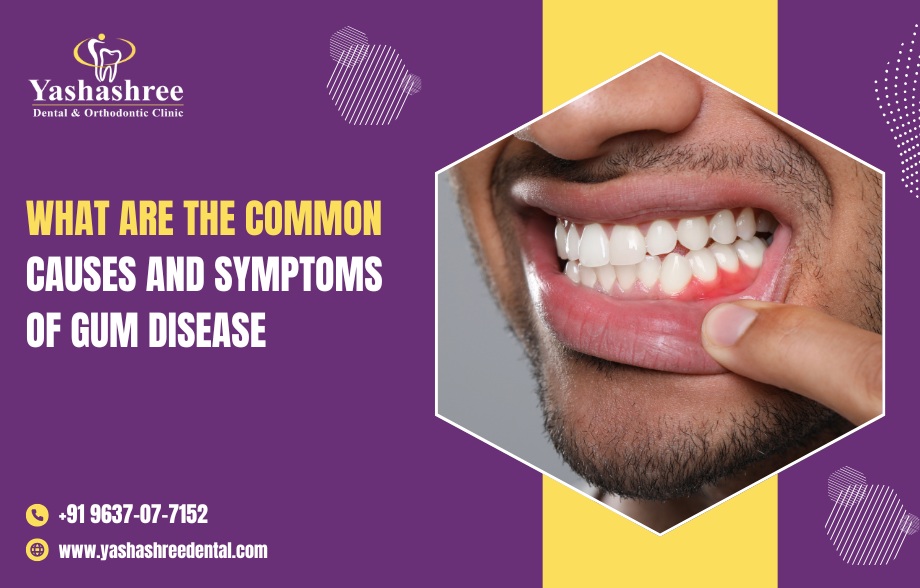
Inflammation causes the gums to look shiny, red, or enlarged. When this is ignored, it progresses to a deeper gum infection.
3. Persistent Bad Breath
Bad breath that remains even after brushing can signal bacteria buildup under the gums.
4. Gum Tenderness or Discomfort
You may not feel pain, but the gums might feel sensitive or slightly sore while eating or brushing.
5. Receding Gums
If your teeth start looking longer than before, it could be because the gums are moving away due to infection.
6. Pus or Discharge
This is a sign of advanced gum disease and needs immediate care.
7. Loose Teeth
When gum disease progresses, the bone supporting the teeth begins to weaken. You may feel one or more teeth shifting.
If you notice any of these signs, it is a good idea to book an appointment at Yashashree Dental Clinic. Early treatment is much easier and far less invasive.
Stages of Gum Disease: How It Progresses
Understanding the stages helps you see why quick treatment matters.
Gingivitis
This is the earliest stage. Gums bleed easily, look inflamed, and may feel sensitive. At this point, the damage is reversible with timely cleaning and improved oral care.
Mild Periodontitis
The infection begins to damage the bone that supports your teeth. Gums may recede slightly.
Moderate to Severe Periodontitis
Bone loss increases, pockets deepen, and teeth may start loosening. At this stage, specialised gum treatment in Satara at Yashashree Dental Clinic becomes necessary to stop the progression.
How Yashashree Dental Clinic Helps Treat Gum Disease
When you visit the clinic, our dentist will first evaluate your gum condition. Treatment depends on how serious the infection is.
1. Professional Cleaning
This removes plaque and tartar from areas that brushing cannot reach. It is the simplest way to control early gum disease.
2. Deep Cleaning
Deep cleaning involves scaling and root planing. This helps remove bacteria lodged under the gums and smoothens the root surfaces so the gums can heal.
3. Medication
Some cases need antibacterial gels or medicated rinses to control infection.
4. Laser Gum Treatment
Laser therapy reduces bacteria and inflammation gently with minimal discomfort.
5. Periodontal Surgery
For advanced cases, surgery is required to clean deep infection or regenerate bone.
The approach at Yashashree Dental Clinic is calm, communicative, and comforting. Every patient is guided step by step so they never feel overwhelmed.
Daily Habits That Support Healthy Gums
Your gums can stay strong and infection-free when you add a few simple habits to your routine.
- Brush twice a day with the right technique
- Clean between teeth using floss or interdental brushes
- Drink enough water to prevent dry mouth
- Avoid tobacco
- Eat more fruits and vegetables rich in vitamin C
- Get professional cleaning every six months
- Manage diabetes and other medical conditions regularly
- Small changes like these make a huge difference over time.
FAQs
1. Can gum disease go away on its own?
No, it does not resolve without treatment. Early gum disease improves with professional cleaning and better oral hygiene. Advanced cases need specialised care to control the infection.
2. Is gum disease painful?
Not always. Many early cases are painless, which is why they are often unnoticed. Pain usually appears in advanced stages, especially when infection spreads deeper.
3. How often should I get gum cleaning done?
For most people, every six months is ideal. If you already have gum disease, your dentist may suggest more frequent visits. Regular cleaning prevents the infection from returning.
4. Can gum disease cause tooth loss?
Yes, untreated gum disease is a major cause of tooth loss. Once the bone supporting your teeth weakens, teeth begin to loosen. Early treatment prevents this.
5. Is gum disease linked to overall health?
Yes, gum disease has been connected to diabetes, heart conditions, and low immunity. Healthy gums support better overall wellness. This is why timely gum treatment in Satara at Yashashree Dental Clinic is important for more than just your smile.
Caring for Your Gums Today Protects Your Smile Tomorrow
Gum disease may start quietly, but it can create long-lasting problems when ignored. With regular checkups, early detection, and professional gum treatment in Satara at Yashashree Dental Clinic, you can keep your gums healthy and your teeth strong for years. A little attention now can save you from discomfort later and protect the foundation of your smile.